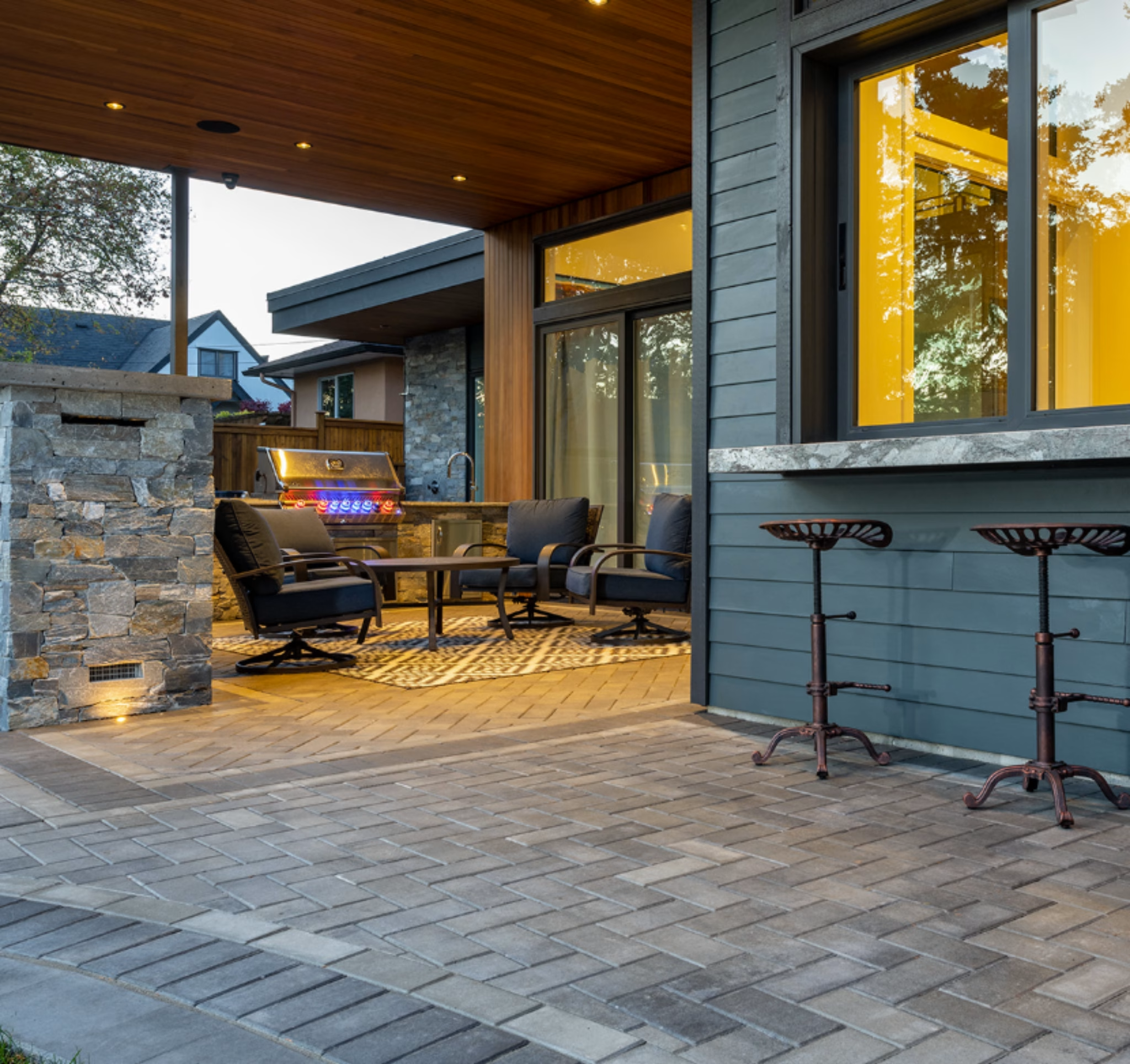
Why Our Process Matters in Boise
Ready to Start Your Project?
A premium hardscape should be built to handle Boise conditions, not just to look good on install day.
Paver Pros Boise serves homeowners across Boise, Meridian, Eagle, Nampa, Caldwell, Star, Kuna, and Middleton with patios, driveways, walkways, outdoor living spaces, retaining walls, and fire features built from the ground up.
Call, text, or request a quote to schedule your design consultation.
208 941 3300
Local site conditions matter just as much as climate. Treasure Valley soils can include clayey or slow-permeability layers, hardpan, and compaction issues that hold water instead of shedding it. That is why our hardscape installation process starts with diagnosis, not guesswork. Whether we are handling a paver patio installation Boise families want for outdoor living or a paver driveway installation Boise homeowners need to carry daily vehicle traffic, we build the foundation around the site, the drainage path, and the way the surface will actually be used.
Start with a site visit and a clear plan for your patio, driveway, or walkway.
Step 1: Consultation and Site Evaluation
Project goals, budget, and scope
During the consultation, we review the project scope, desired look, traffic patterns, elevations, transitions to existing surfaces, and any extras such as retaining walls, steps, seating walls, lighting, or fire features. We also talk through budget ranges early so the design stays grounded in what makes sense for the property and your goals.
Drainage, slope, soil, and access review
Then we evaluate the site itself. This is where experienced Boise paver contractors separate themselves from companies that are only focused on the finished photo.
We measure the area, review grades and slopes, identify low spots, look at downspouts and irrigation, note gates and equipment access, and check for signs of soft or unstable subgrade. We also ask about seasonal water movement, including flood irrigation where applicable. In Boise, drainage responsibility can involve street drainage, onsite runoff control, irrigation districts, or other local systems, so water management needs to be addressed before construction starts.
Get layout guidance, material recommendations, and site-specific feedback before construction begins.
Step 2: Design Planning and Material Selection
Layout, traffic flow, and outdoor living function
For patios, we plan usable square footage, furniture clearances, and comfortable circulation. For walkways, we focus on clean entries and natural flow. For driveways, we look closely at turning areas, parking behavior, and edge conditions. Good design makes the project feel intentional. Great design also makes it easier to build correctly.
During the consultation, we review the project scope, desired look, traffic patterns, elevations, transitions to existing surfaces, and any extras such as retaining walls, steps, seating walls, lighting, or fire features. We also talk through budget ranges early so the design stays grounded in what makes sense for the property and your goals.
Paver styles, patterns, borders, and feature options
Material selection goes beyond color. We help you choose the right paver type, texture, size, pattern, border treatment, and thickness for the application. Driveways and vehicular areas need a different structural approach than patios and pedestrian spaces. In many cases, herringbone patterns are preferred in driveways because they handle turning forces and interlock well under traffic.
We also coordinate companion features such as wall block, step caps, coping, and fire feature materials so the finished project feels cohesive instead of pieced together. The goal is to choose materials that look right for the home and perform well in Idaho conditions.
Step 3: Demolition and Excavation
Removing failed concrete, asphalt, or landscape materials
If an old surface has failed, we remove it first. That can include cracked concrete, worn asphalt, unstable gravel, old edging, turf, or other landscape materials that are in the footprint of the new work. We do not bury problems under new pavers and call it prep.
Demolition is also the right time to expose issues that would otherwise stay hidden, such as poor grading, irrigation conflicts, buried debris, or unstable areas in the subgrade. Catching those early is part of building a surface that lasts.
Excavating to the correct depth for long-term performance
Excavation depth is one of the biggest differences between professional paver installation and a short-lived install. We excavate for the full paver system: paver thickness, bedding layer, aggregate base, compaction, and finish grade. The target is not just to make the pavers sit flush. The target is to create the right structural section for the application and the site.
Industry guidance notes that aggregate bases can start at about 6 inches in some non-freeze-thaw, well-drained installations, while residential streets begin around 8 to 10 inches, with thicker bases often used in regions with frequent freeze-thaw cycling. In Boise, that is exactly why we do not quote a one-size-fits-all depth before we evaluate the soil, drainage plan, and intended load. A patio, walkway, and driveway should not all be built the same way.
Step 4: Base Preparation and Drainage Planning
Building a compacted aggregate foundation
Where conditions call for it, we may separate materials, stabilize soft areas, or make other adjustments based on what the site is telling us. Once the base is properly compacted and graded, we prepare the bedding layer so the pavers have a consistent setting bed and a smooth, accurate surface to install on.
This is the step homeowners do not always see, but it is the step that controls long-term performance. Good-looking pavers are easy. Stable pavers that stay flat through traffic, irrigation, and winter movement take discipline below the surface.
Managing water before the surface goes in
Drainage planning is just as important as base prep. Water should move across and away from the hardscape in a controlled way. That means establishing the proper pitch, accounting for downspouts, tying into existing grades, and making sure runoff is not being pushed back toward the house, garage, or neighboring problem area.
In Boise, drainage management deserves extra attention. The City of Boise administers stormwater and runoff controls, and many areas also deal with flood irrigation or local drainage districts. Water does not care how expensive the pavers are. If it has nowhere to go, it will find the weak point. Our job is to eliminate that weak point before installation.
Ask about drainage, base depth, demolition, and what your property needs below the surface.
Step 5: Professional Paver Installation
Laying pattern, alignment, cuts, and transitions
With the foundation complete, we begin setting pavers to tight lines, consistent joints, and the agreed layout. This is where craftsmanship shows. Straight runs need to stay straight. Curves need to look intentional. Borders need to frame the field cleanly. Cuts need to finish tight at restraints, walls, steps, and edges.
We also pay close attention to transitions: from patio to threshold, driveway to garage apron, walkway to stoop, and pavers to adjacent lawn or planting beds. Those connection points are where mediocre installs often look rough. On a premium project, those details matter.
Edge restraints, polymeric sand, and final compaction
Once the field is installed, the system still is not complete. Edge restraints are installed to hold the perimeter and protect the interlock of the field. Without proper edge restraint, pavers can slowly spread and lose alignment over time.
Then we sweep in polymeric sand, compact the surface, refill the joints as needed, and activate the sand according to product requirements. Polymeric sand helps lock the system together, reduces washout, and limits joint erosion and weed intrusion when installed correctly. This final stage is what turns individual units into a finished pavement system.
Step 6: Final Inspection and Walkthrough
Quality control and punch-list review
Care, maintenance, and next steps
Then we walk the project with you. We explain what was built, point out drainage features, review any settling expectations around adjacent landscape areas, and give straightforward care guidance. That includes what to watch for seasonally, how to keep joints performing well, and when maintenance services such as re-sanding, re-leveling, or sealing may make sense down the road.
A good contractor should not disappear when the final paver is set. The final walkthrough is where you get confidence that the job was done correctly and that you understand how to protect the investment.
Ready to Start Your Project?
A premium hardscape should be built to handle Boise conditions, not just to look good on install day.
Paver Pros Boise serves homeowners across Boise, Meridian, Eagle, Nampa, Caldwell, Star, Kuna, and Middleton with patios, driveways, walkways, outdoor living spaces, retaining walls, and fire features built from the ground up.
Call, text, or request a quote to schedule your design consultation.
208 941 3300